Smart Money Moves West: How Welsh Founders Are Rewriting the Rules of Venture Capital
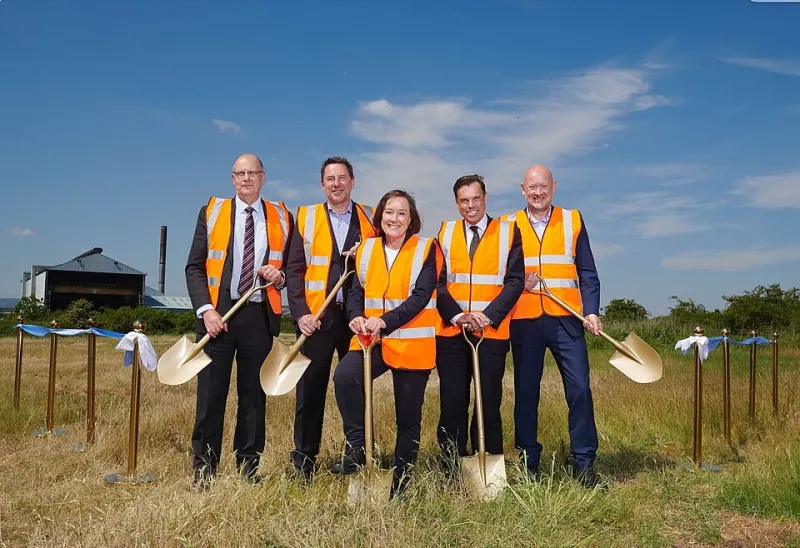
Photo: Wikideas1, CC0, via Wikimedia Commons
For years, the received wisdom in British venture capital was straightforward: if you wanted to back a high-growth technology company, you looked to London, Cambridge, or Edinburgh. Wales barely registered on the institutional radar. That calculation is changing — and it is changing faster than most observers anticipated.
A confluence of structural advantages, improving infrastructure, and a maturing founder community is drawing venture capital firms to Wales with a seriousness of purpose that marks a genuine shift in the country's economic trajectory. Investors who once regarded Cardiff as a pleasant detour are now building dedicated pipelines into the Welsh market.
The Economics of Ambition Outside the M25
The arithmetic is difficult to ignore. A Series A-funded startup headquartered in London will typically burn through capital at a rate that would make a Welsh CFO wince. Office costs, talent acquisition premiums, and the general friction of operating in one of Europe's most expensive cities can consume a disproportionate share of a funding round before meaningful product development occurs.
Welsh founders, by contrast, are demonstrating that building a scalable business need not require a Shoreditch postcode. Operational costs across Cardiff, Swansea, and the broader Welsh business corridor remain substantially lower than their English metropolitan equivalents. For investors scrutinising burn rates during due diligence, this translates directly into extended runway — and extended runway means more time to reach the milestones that justify the next round.
This is not merely anecdotal. Venture capital firms conducting comparative analyses of portfolio companies are increasingly noting that Welsh-based businesses deliver stronger capital efficiency metrics at equivalent stages of growth. The conversation has shifted from 'why Wales?' to 'why not Wales?'
Talent Without the Premium
Perhaps the most compelling argument Welsh founders are making to prospective investors concerns talent. The country's universities — Cardiff, Swansea, Aberystwyth, and Bangor among them — produce a steady pipeline of graduates in engineering, computer science, data analytics, and life sciences. Many of these individuals have historically been absorbed into English markets simply because local opportunities were insufficient to retain them.
That dynamic is reversing. As Welsh-headquartered technology and professional services companies have grown in ambition and profile, the retention picture has improved considerably. Founders are now able to recruit credibly from within Wales, supplementing local talent with professionals willing to relocate for a quality of life that London simply cannot match.
For venture capital firms, this represents a meaningful de-risking of their investment thesis. A company that can hire a senior engineering team at competitive — rather than inflated — salaries, and retain them through genuine lifestyle advantages, is a company with a structurally healthier cost base. Due diligence teams are beginning to incorporate these workforce dynamics into their assessments in a way that was not standard practice five years ago.
Community as Competitive Infrastructure
One element of the Welsh business environment that consistently surprises investors conducting site visits is the density and quality of its professional networks. Wales operates at a human scale that London cannot replicate. Introductions happen quickly. Peer support between founders is genuine rather than performative. The distance between a promising startup and a potential enterprise customer, a government contract, or a strategic adviser is frequently measured in one or two degrees of separation.
Organisations such as Finance Wales — now operating under the Development Bank of Wales — have spent years cultivating exactly this kind of connective tissue. The Development Bank's co-investment model, which frequently brings private venture capital alongside its own funding, has helped normalise institutional investment in Welsh businesses and created a more legible entry point for funds approaching the market for the first time.
This ecosystem cohesion matters in practical terms. Portfolio companies benefit from warm introductions, shared knowledge of local regulatory and procurement landscapes, and a founder community that tends to collaborate rather than compete at the early stage. For investors accustomed to the atomised and often transactional networks of larger tech hubs, this can feel like a significant operational advantage.
Funding Rounds That Are Changing the Narrative
The evidence is accumulating in the form of funding announcements that would have seemed improbable a decade ago. Welsh technology businesses across sectors including healthtech, fintech, cybersecurity, and clean energy have secured multi-million pound rounds from investors based in London, Dublin, and further afield. Each successful raise recalibrates the market's perception of what Welsh companies are capable of achieving.
The pattern that emerges from these rounds is instructive. Welsh founders are not positioning themselves as discount alternatives to London-based peers. They are making an affirmative case: that building in Wales provides structural advantages that translate into superior risk-adjusted returns for investors. That is a meaningfully different conversation, and it is one that sophisticated capital is beginning to take seriously.
Several London-based venture funds have responded by establishing formal relationships with Welsh accelerators and innovation centres, or by hiring investment professionals with specific mandates to source deals in the Welsh market. This institutional formalisation is a reliable indicator that Wales has crossed a threshold from peripheral curiosity to legitimate investment geography.
What Founders Must Still Demonstrate
It would be misleading to suggest that Welsh founders face no structural challenges in accessing venture capital. The concentration of decision-making power in London remains a reality, and the time and cost of relationship-building with distant investors should not be underestimated. Founders who have succeeded in attracting institutional capital are consistent in one piece of advice: the Welsh advantage must be articulated clearly and proactively, not assumed.
Investors unfamiliar with the market will require education — on the talent landscape, the cost environment, the support infrastructure available through the Development Bank and bodies such as Business Wales, and the quality of the founder community. That educational burden falls on Welsh founders, and those who embrace it as a commercial opportunity rather than an inconvenience tend to fare considerably better.
Networking activity at events such as the Cardiff Capital Region's investment forums and the growing calendar of Welsh technology gatherings is increasingly important as a mechanism for building the investor familiarity that precedes serious due diligence conversations.
A Market Reaching Its Inflection Point
The Welsh venture capital ecosystem is not yet fully formed. There remain gaps in late-stage funding provision, and the density of specialist sector funds with deep Welsh market knowledge is still developing. These are real limitations, and acknowledging them honestly is part of building the credibility that the market requires.
Nevertheless, the direction of travel is unambiguous. Wales is producing founders of genuine calibre, operating businesses with disciplined financial management, and doing so within a support environment that is meaningfully better than it was even five years ago. Investors who take the time to conduct proper due diligence on the Welsh market are finding opportunities that the capital-saturated ecosystems of larger cities can no longer reliably offer.
For Welsh entrepreneurs preparing to raise their next round, the message is one of quiet confidence. The advantages are real, the narrative is strengthening, and the money is beginning to follow. The task now is to ensure that the ambition matches the opportunity — and on that front, the evidence from Wales's emerging founder community is increasingly encouraging.