Ports of Opportunity: How Wales Is Quietly Rewriting Britain's Logistics Map

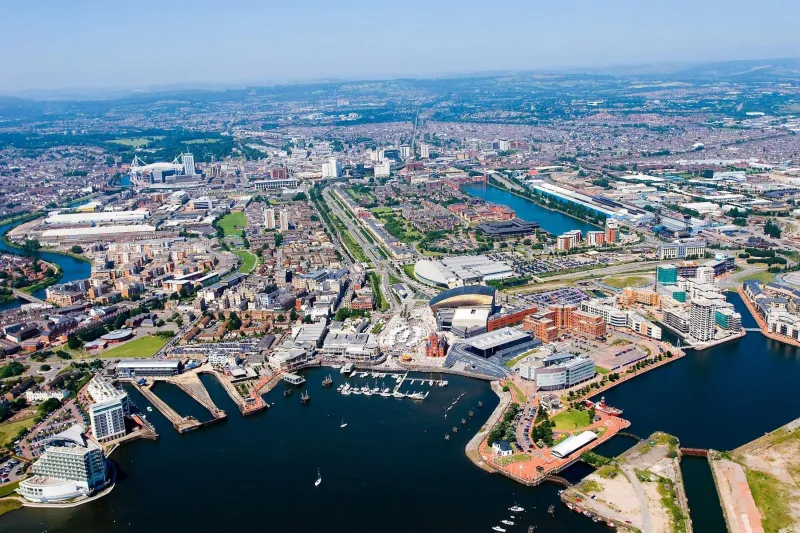
Photo: Eric Jones, CC BY-SA 2.0, via Wikimedia Commons
For decades, the dominant assumption in British freight and logistics was straightforward: goods moved through the south-east. Felixstowe, Southampton, and the Dover Strait defined the nation's commercial arteries. Wales, for all its western coastline, was largely treated as a transit zone rather than a logistics destination. That assumption is now being challenged with considerable force.
A convergence of infrastructure investment, post-Brexit trade reconfiguration, and the reshoring of manufacturing capacity is drawing serious attention to Welsh ports and intermodal hubs. Operators who once viewed Holyhead as a ferry terminal and Port Talbot as an industrial relic are reassessing their networks — and finding that Wales offers something increasingly scarce in British logistics: capacity.
The Infrastructure Dividend
Holyhead, on the Isle of Anglesey, handles more roll-on/roll-off freight than any other port in Wales and ranks among the busiest in the United Kingdom. Its significance has grown considerably since Brexit altered trade flows between Great Britain and the Republic of Ireland. With direct land-bridge routes through England facing new administrative friction, the Welsh corridor has become a preferred option for Irish exporters moving goods to continental Europe, and for British manufacturers supplying the Irish market.
The port's operator has committed to a programme of berth upgrades and terminal expansion intended to accommodate next-generation vessels and increase annual throughput capacity. These are not speculative improvements. They reflect contracted demand from shipping lines that have already adjusted their rotation schedules to prioritise the Irish Sea corridor.
Further south, the Port of Milford Haven — one of the United Kingdom's largest energy ports by tonnage — is broadening its commercial footprint. Historically synonymous with liquefied natural gas imports and petroleum products, Milford Haven is now positioning itself as a hub for offshore wind supply chain activity, aligned with the considerable renewable energy development planned for the Celtic Sea. For logistics operators serving the energy sector, this represents an entirely new class of cargo flow.
Swansea's Freeport designation, part of the broader UK Freeports programme, adds a further dimension. Businesses operating within the Freeport zone benefit from simplified customs procedures, enhanced capital allowances, and reduced employer National Insurance contributions. For manufacturers and distributors with international supply chains, this fiscal architecture changes the economics of Welsh logistics meaningfully.
Operators Recalibrate Their Networks
Speak to logistics managers who have recently reviewed their UK distribution strategies and a common theme emerges: the south-east is running out of road. Congestion at major English ports is not merely an inconvenience — it is a quantifiable cost. Dwell times have extended, haulage rates from the south-east have risen sharply, and the labour market for port operatives in the Home Counties remains chronically tight.
By contrast, Welsh facilities offer shorter dwell times, more predictable turnaround, and access to a haulage workforce that, while not without its own pressures, has not experienced the same degree of attrition seen in south-east England. For time-sensitive freight — particularly chilled and temperature-controlled goods moving between Ireland, Wales, and the English Midlands — the arithmetic increasingly favours western routing.
Several third-party logistics providers operating across the UK have quietly begun shifting distribution contracts to Welsh-based facilities, citing both cost and resilience. One senior operations director at a national food distribution company, speaking on background, described the decision as "long overdue — we'd been defaulting to the south-east out of habit rather than analysis."
The Reshoring Effect
The reshoring of manufacturing capacity to the United Kingdom — driven by supply chain vulnerability exposed during the pandemic, rising Asian production costs, and energy price volatility — has created new domestic freight flows that did not exist five years ago. Wales has been a significant beneficiary of this trend, with advanced manufacturing investment landing in areas including Deeside, Newport, and the Heads of the Valleys.
As factories and assembly operations establish themselves in Wales, their logistics requirements follow. Raw material inflows, component deliveries, and finished goods dispatch all generate port and road freight demand. Welsh ports, positioned to serve both domestic and Irish Sea trade, are well-placed to capture a substantial portion of this activity.
The road network connecting Welsh ports to the English Midlands — the M4 corridor in the south and the A55 and A5 in the north — provides direct access to the manufacturing heartlands of the UK. Journey times from Holyhead to Birmingham, for instance, are competitive with those from Felixstowe, without the M25 variable that renders south-eastern logistics so unpredictable.
What Businesses Should Consider
For Welsh companies currently routing their freight through English ports, the case for reviewing that decision is compelling. The combination of Freeport incentives, growing vessel frequency on Irish Sea services, and improving intermodal connections via rail freight terminals at Cardiff and Wrexham creates a logistics proposition that warrants careful evaluation.
For businesses elsewhere in the UK, Welsh ports represent a genuine optionality play — a way of building redundancy into supply chains that have been exposed as fragile. The cost of maintaining a secondary logistics route through Wales is modest compared with the operational disruption caused by a single prolonged congestion event at a primary English port.
Logistics consultants advising UK manufacturers increasingly recommend that clients conduct a formal corridor analysis before renewing freight contracts. In a significant proportion of cases, Welsh routing emerges as the more cost-effective and resilient choice, particularly for businesses with Irish, North American, or Atlantic-facing trade.
A Strategic Asset Coming of Age
Wales's ports have always been a geographical asset. What is changing is the commercial and political environment that determines how that asset is valued. Freeport status, renewable energy investment, reshoring momentum, and Irish Sea trade growth are not isolated phenomena — they are reinforcing trends that collectively elevate Welsh logistics infrastructure from a regional convenience to a national strategic resource.
For businesses building supply chains designed to last, the question is no longer whether Welsh ports deserve consideration. It is whether you can afford to overlook them.