Inside the Deal: Why Welsh Companies Are Commanding Premiums in UK Acquisitions

For much of the past decade, Wales occupied a peripheral role in the domestic mergers and acquisitions conversation. Buyers from London, Birmingham, and Edinburgh would scan the Midlands, the South East, and occasionally Scotland for acquisition targets, largely overlooking Welsh firms unless a specific operational need brought them westward. That dynamic is shifting, and shifting with some speed.
Across a range of sectors — from professional services and advanced manufacturing to food production and digital infrastructure — Welsh businesses are now attracting sustained interest from acquirers who are discovering that the characteristics that define Welsh enterprise translate directly into acquisition value. The question deal advisors are beginning to ask is not whether Welsh companies represent good targets, but why it took the market so long to notice.
The Structural Case for Welsh Targets
At the heart of the Welsh M&A premium lies a combination of factors that individually appear modest but collectively present a compelling investment thesis. Cost structures in Wales remain materially lower than in comparable English regions, particularly in property, labour, and operational overheads. For an acquirer seeking to integrate a target without immediately inflating its cost base, this differential matters considerably.
Beyond cost, Welsh businesses frequently demonstrate what corporate finance practitioners describe as operational compactness — lean management structures in which decision-making authority sits close to the operational core. This characteristic, born partly of necessity in smaller regional markets, proves highly attractive to acquirers who have grown weary of integrating English mid-market firms burdened with layers of middle management and siloed departments.
One transaction adviser based in Cardiff, who has advised on several cross-border deals over the past three years, put it plainly: "When an acquirer from outside Wales begins due diligence, they often remark on how straightforward the business is to understand. The financials are clean, the key relationships are visible, and the leadership team is accessible. That simplicity has a value that isn't always reflected in the initial asking price, but it absolutely influences where the final figure lands."
Cultural Alignment as a Commercial Asset
Cultural alignment is a term frequently deployed in M&A contexts but seldom examined with rigour. In the Welsh context, it carries genuine commercial weight. Welsh business culture tends to emphasise long-term relationships, community accountability, and a degree of operational loyalty — both within the workforce and across supplier networks — that acquirers from more transactional environments find difficult to replicate organically.
For English buyers in particular, the integration risk associated with Welsh acquisitions is frequently cited as lower than equivalent deals in other regions. Staff retention post-acquisition is one measurable indicator. Advisors working on Welsh transactions note that employee attrition in the twelve months following completion tends to be below the national average for comparable deal sizes, a statistic that carries significant weight when human capital is central to the target's value proposition.
A senior partner at a Welsh law firm with a dedicated corporate transactions practice observed that cultural continuity has become an explicit talking point in negotiations: "Acquirers are increasingly asking about the culture before they ask about the EBITDA multiple. They've learned, often the hard way, that cultural misalignment destroys integration value. Welsh businesses tend to have a coherence to them — a sense of shared purpose — that survives a change of ownership more intact than many buyers expect."
Sector Concentrations Driving Deal Flow
Not all Welsh sectors are attracting equal attention. The strongest acquisition interest is currently concentrated in a handful of areas where Welsh firms have developed genuine competitive differentiation.
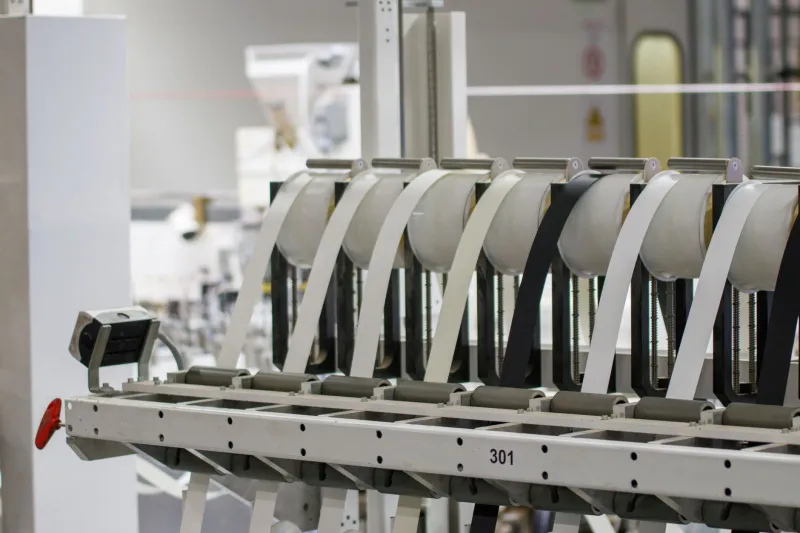
Advanced manufacturing, particularly in precision engineering and composites, is drawing buyers from across the UK who are seeking to onshore capabilities previously sourced from continental Europe. Welsh firms in this space often hold long-standing relationships with aerospace and defence primes, providing acquirers with immediate access to frameworks and supply chain positions that would take years to establish independently.
Professional services — encompassing accountancy, legal, and specialist consultancy — represent another active area. Welsh practices, particularly those with bilingual capabilities and strong public sector client bases, offer acquirers a combination of recurring revenue and regulatory expertise that is difficult to build from scratch.
Food and drink, long a cornerstone of the Welsh economy, is attracting interest from consolidators seeking provenance-led brands with authentic regional credentials. As consumer demand for traceable, locally produced goods continues to grow, Welsh food businesses with established supply chains and credible origin stories are commanding valuations that would have seemed optimistic five years ago.
What Buyers Are Getting Wrong
Despite the growing enthusiasm, experienced advisors caution that not all acquirers approach Welsh targets with appropriate understanding. A recurring mistake involves underestimating the importance of relationship continuity with key customers and suppliers. In markets where personal trust underpins commercial arrangements, the departure of a founding owner-manager can erode revenue far more quickly than a standard integration model would anticipate.
The bilingual dimension of operating in Wales is another area where acquirers sometimes stumble. Businesses serving Welsh-medium communities or holding public sector contracts with Welsh language obligations require genuine commitment rather than perfunctory compliance. Buyers who treat this as an administrative inconvenience rather than a cultural responsibility frequently encounter resistance that complicates integration.
There is also a tendency, particularly among buyers from larger urban centres, to undervalue the depth of local networks that Welsh businesses have cultivated. Supplier relationships, referral arrangements, and informal trade associations represent genuine commercial infrastructure. Disrupting these connections — through rapid rebranding, management replacement, or operational relocation — can destroy value that no amount of post-acquisition investment easily restores.
The Adviser Ecosystem Supporting Deal Activity
Wales has developed a credible advisory infrastructure to support the increasing volume of M&A activity. Corporate finance boutiques in Cardiff and Swansea, alongside the Welsh offices of national practices, are increasingly specialised in cross-border transactions and are well-positioned to guide both sellers and acquirers through the particular dynamics of the Welsh market.
Development Bank of Wales continues to play a role in supporting deal structures, particularly where management buyouts or partial acquisitions are involved, providing a degree of institutional confidence that can accelerate transaction timelines. Business Wales and sector-specific trade bodies also contribute to deal facilitation, often connecting prospective acquirers with suitable targets before formal processes are initiated.
A Market Finding Its Confidence
Wales's emergence as a genuine destination for strategic acquisition is not accidental. It reflects years of business development, infrastructure investment, and a growing willingness among Welsh founders to consider external capital and ownership transition as legitimate strategic options rather than admissions of failure.
For buyers prepared to approach the Welsh market with the respect and rigour it deserves, the opportunity is substantial. The combination of competitive valuations, operational quality, cultural resilience, and sector strength creates an acquisition environment that is, in several meaningful respects, more attractive than more heavily contested English markets.
The advisers who have been working this territory quietly for several years are beginning to say so publicly. The rest of the market appears to be listening.