Steel, Silicon, and Substance: How Wales Is Becoming Britain's Deep Tech Heartland
A Different Kind of Tech Story
When founders and investors discuss deep technology — the kind rooted in physics, materials science, advanced manufacturing, and semiconductor design — conversations rarely begin with Wales. They tend to start in California, Munich, or perhaps Cambridge. Yet a growing number of hardware innovators, many of them with the credentials to work anywhere, are choosing to build their companies in Welsh cities and towns. The question worth asking is not whether this is happening, but why.
The answer lies in a combination of factors that are difficult to replicate elsewhere: a deep engineering heritage, meaningful proximity to UK manufacturing supply chains, comparatively low operational costs, and an increasingly active venture capital community that has begun to recognise the commercial potential sitting in Welsh research institutions and industrial corridors.
Engineering in the Bloodstream
Wales has never truly abandoned its industrial identity. Whilst the coal and steel industries that once defined the nation's economy have contracted dramatically, the engineering culture they cultivated did not disappear. It evolved. Universities such as Cardiff University, Swansea University, and Bangor University have built research programmes in photonics, compound semiconductors, advanced materials, and power electronics that are genuinely world-class, even if they are not always world-famous.
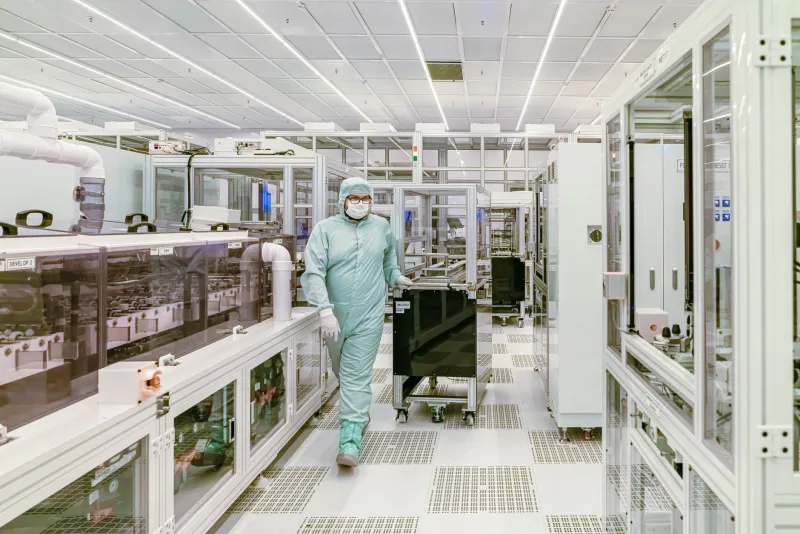
The compound semiconductor cluster centred on Cardiff is perhaps the most striking example. The Institute for Compound Semiconductors, a collaboration between Cardiff University and industry partners, has positioned Wales as one of Europe's leading centres for the development of gallium nitride and related technologies — materials that underpin everything from 5G infrastructure to electric vehicle power systems. This is not peripheral research. These are technologies at the core of the next generation of global industrial infrastructure.
For founders looking to build hardware companies, access to this kind of specialised academic expertise is not a secondary consideration — it is foundational. The ability to recruit doctoral researchers, collaborate on IP development, and tap into laboratory facilities without the overheads associated with London or Bristol gives Welsh-based deep tech ventures a structural advantage that is difficult to quantify but impossible to ignore.
The Cost Calculus That Investors Understand
Deep tech companies are capital-intensive by nature. Hardware development cycles are long, prototyping is expensive, and the path from laboratory breakthrough to manufacturable product demands sustained investment. In that context, operational cost efficiency is not merely a preference — it is a strategic imperative.
Office and laboratory space in Cardiff or Swansea costs a fraction of equivalent facilities in London, Oxford, or Edinburgh. Salary expectations, whilst competitive, reflect a regional market rather than the inflated benchmarks of the South East. For a company burning through capital whilst developing a novel semiconductor process or an advanced sensor platform, these differences compound significantly over a three-to-five-year development horizon.
Investors who have backed Welsh deep tech ventures are increasingly vocal about this arithmetic. The runway that a given funding round provides in Wales is measurably longer than it would be in many competing locations. For early-stage hardware companies, where the risk of running out of capital before achieving a critical technical milestone is existential, that additional runway can be the difference between success and failure.
Proximity to the Manufacturing Base
One of the more underappreciated advantages that Wales offers deep tech companies is its geographic and logistical proximity to the UK's remaining manufacturing heartlands. The ability to work closely with contract manufacturers, systems integrators, and industrial end-users without crossing international borders — or even travelling particularly far — accelerates the iteration cycles that hardware development demands.
Wales itself hosts significant manufacturing capacity in aerospace, automotive components, and advanced electronics. Companies such as Airbus (which operates a major wing manufacturing facility in Broughton, just across the border in Flintshire), alongside a network of precision engineering firms throughout South and Mid Wales, provide both potential customers and potential manufacturing partners for deep tech ventures at various stages of development.
This is a dynamic that software-centric tech hubs struggle to replicate. The physical proximity of hardware innovators to the industries they serve compresses feedback loops and reduces the commercial risk inherent in developing technology for complex industrial applications.
Capital Is Following the Talent
For much of the past decade, the principal challenge facing Welsh deep tech companies was not a shortage of ideas or engineering talent — it was access to patient, knowledgeable capital. Hardware ventures require investors who understand long development timelines and are comfortable with the technical complexity that distinguishes deep tech from software-led businesses. That kind of investor was, historically, underrepresented in Wales.
The picture is changing. UK-wide venture funds with deep tech mandates have begun to look more deliberately at Welsh opportunities, partly because competition for deals in London and Cambridge has driven valuations to levels that compress returns. Welsh Government support mechanisms, including the Development Bank of Wales and various innovation funding programmes, have also played a role in de-risking early-stage investments and attracting co-investors from further afield.
There is also a growing network of angel investors with industrial and engineering backgrounds who have settled in Wales and are actively deploying capital into companies aligned with their own expertise. This combination of institutional and informal capital, whilst still less abundant than in the UK's primary tech clusters, is sufficient to support a meaningful number of deep tech ventures through their critical early stages.
The Talent Question, Answered Differently
The conventional assumption is that attracting world-class technical talent requires a world-class city with world-class amenities. Wales challenges that assumption in practice. A significant proportion of the engineers, researchers, and technical specialists who have joined Welsh deep tech companies in recent years have done so not despite Wales's location, but partly because of it.
Quality of life considerations — housing affordability, access to outdoor environments, lower commuting pressures, stronger community ties — carry genuine weight for senior technical professionals, particularly those at a stage of life where family and lifestyle priorities compete with career advancement. Wales scores well on these dimensions in ways that London, Munich, and San Francisco do not.
There is also a retention argument. Companies that build in Wales report lower staff turnover among technical staff than equivalent businesses in major metropolitan centres. For organisations whose competitive advantage is embodied in the knowledge and experience of a relatively small team, that stability has real commercial value.
A Moment Worth Recognising
Wales is not Silicon Valley, and it does not aspire to be. What it offers deep tech companies is something different and, for many founders, more useful: a mature engineering culture, genuine research excellence, operational cost efficiency, and a proximity to industrial end-markets that accelerates the journey from laboratory to commercial deployment.
For UK businesses and investors seeking to understand where the next generation of advanced hardware companies will emerge, Wales deserves a closer look than it typically receives. The infrastructure, the talent, and the capital are converging. The companies building on that foundation are doing so quietly — but with considerable ambition.