From Field to Future: How Welsh Agritech Is Shaping Britain's Food Security Story
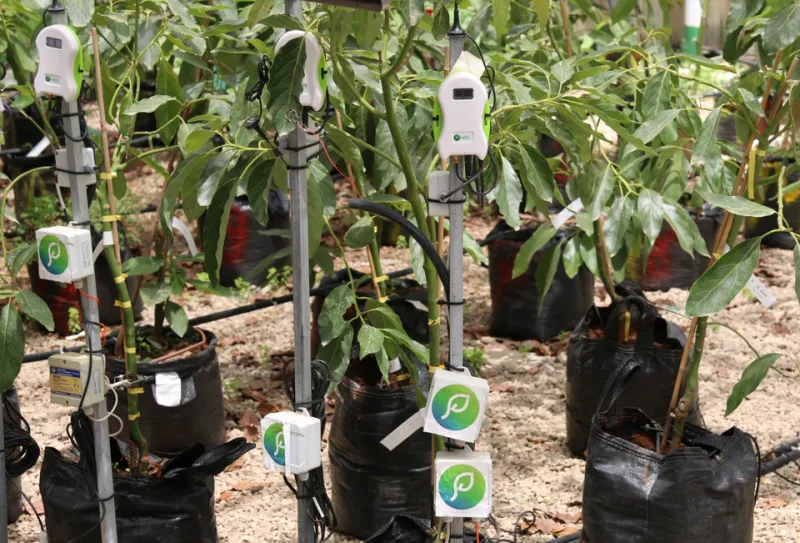
Photo: Simple loquat, CC0, via Wikimedia Commons
For decades, Wales has been defined in the national imagination by its sweeping uplands, its sheep farming traditions, and the particular resilience of its rural communities. That image, while not without merit, has obscured something rather more significant: a quiet but accelerating transformation in how Welsh agricultural businesses are approaching the challenges of modern food production. Across Powys, Ceredigion, and the Vale of Glamorgan, a new generation of agritech enterprises is building technologies that are attracting serious attention from UK food producers, supermarket buyers, and institutional investors alike.
The timing is not coincidental. With the UK government's post-Brexit agricultural policy placing renewed emphasis on domestic food security, and with major retailers under mounting pressure to demonstrate credible net-zero supply chain credentials, Welsh agritech firms have found themselves occupying a strategically valuable position. Their innovations are not simply interesting — they are increasingly necessary.
Precision Agriculture Finds a Home in the Welsh Uplands
One of the more counterintuitive aspects of Wales's agritech emergence is that it has been shaped, in part, by the very constraints of Welsh geography. Farming in Wales is not straightforward. The terrain is demanding, the weather variable, and the average farm holding considerably smaller than those found in the arable heartlands of East Anglia or Lincolnshire. These conditions have, however, proved to be an unlikely incubator for innovation.
Companies operating across mid and west Wales have been developing precision soil monitoring systems designed specifically for the challenges of upland and mixed-terrain farming. Unlike the broad-acre technologies that dominate precision agriculture in flatter regions, these Welsh-developed tools are engineered for complexity — capable of delivering granular data on soil nutrient levels, moisture content, and microbial activity across highly variable land profiles. The commercial proposition for UK food producers is clear: better soil intelligence translates directly into reduced input costs, higher yields, and more defensible sustainability reporting.
Several Welsh agritech ventures have already secured supply agreements with contract farming operations across England and Scotland, a development that would have seemed improbable even five years ago. The Welsh Government's Farming Connect programme, which has provided both funding and market access support to early-stage rural technology businesses, has played a meaningful role in accelerating this trajectory.
Livestock Monitoring and the Data-Driven Farm
If soil management represents one pillar of Wales's agritech proposition, livestock monitoring represents another — and in some respects, a more commercially mature one. Wales's position as one of the UK's principal sheep and beef cattle producers has created both the demand and the testing environment for connected livestock management technologies.
Welsh technology firms have been developing sensor-based health monitoring systems that track individual animal behaviour, vital signs, and movement patterns in real time. The practical applications are considerable: earlier detection of illness, more accurate pregnancy monitoring, and significant reductions in veterinary intervention costs. For large-scale UK livestock operations, the return on investment has proven compelling enough to drive adoption well beyond Wales's own borders.
What distinguishes the Welsh approach, according to those operating in this space, is the degree to which these technologies have been developed in genuine partnership with working farmers rather than in isolation from them. The result is tooling that reflects the actual rhythms and pressures of livestock management — not an idealised version of it. This practical credibility has become a meaningful differentiator when Welsh firms compete for contracts with UK food processors and retailers requiring robust provenance and welfare data throughout their supply chains.
Retailers and Processors Take Notice
The commercial interest from outside Wales has grown markedly over the past two to three years. Major UK food retailers, under intensifying scrutiny from investors and consumers over their environmental and food security commitments, have been actively seeking supply chain partners with credible sustainability stories. Welsh agritech firms, operating within a regulatory environment that already emphasises environmental land management, have found themselves well-positioned to meet this demand.
Several large food processors with significant Welsh supplier relationships have begun co-investing in agritech pilots designed to improve traceability and reduce the carbon intensity of their raw material sourcing. For Welsh farms and the technology businesses serving them, these partnerships represent not merely commercial contracts but a form of validation that carries weight when seeking further investment or expanding into new markets.
The Welsh lamb and beef sectors, already carrying strong premium positioning in UK retail, stand to benefit disproportionately from the integration of robust digital traceability. A product that can demonstrate not only its geographic origin but also its soil health provenance and animal welfare history is a product that commands shelf space and margin in an increasingly discerning market.
Infrastructure, Investment, and the Road Ahead
For all the genuine momentum, Welsh agritech faces structural challenges that require honest acknowledgement. Rural connectivity remains a persistent constraint. Many of the farms best suited to adopting precision agriculture technologies are also those with the least reliable broadband and mobile data infrastructure. The Welsh Government has made commitments to improving rural digital access, but delivery against those commitments has been uneven, and technology businesses operating in this space are acutely aware of the gap between aspiration and implementation.
Investment flows, while improving, also remain modest relative to the agritech sectors in parts of England and Scotland. Cardiff's emerging investment community has begun to engage more seriously with rural technology businesses, but the cultural and geographic distance between the capital's finance networks and the farms of Breconshire or Anglesey is not insignificant. Bridging that gap — connecting Welsh business across its own internal divides as much as across national ones — remains a priority for those working to develop the sector.
There are, nonetheless, genuine reasons for confidence. The UK's food security agenda is not a short-term political preoccupation; it reflects structural realities that will shape agricultural policy and procurement decisions for the foreseeable future. Wales, with its combination of productive farming tradition, emerging technology capability, and a regulatory culture increasingly aligned with sustainable land use, is positioned to contribute meaningfully to that agenda.
The Welsh countryside has always sustained Britain in the most literal sense. The question now being answered, farm by farm and startup by startup, is whether it can do so in ways that are smarter, more resilient, and more demonstrably sustainable than anything that has come before. The early evidence suggests that it can.